When to paint furniture and when to leave it alone
Some pieces are much better for a coat of paint. Others lose most of their value the moment a brush touches them.
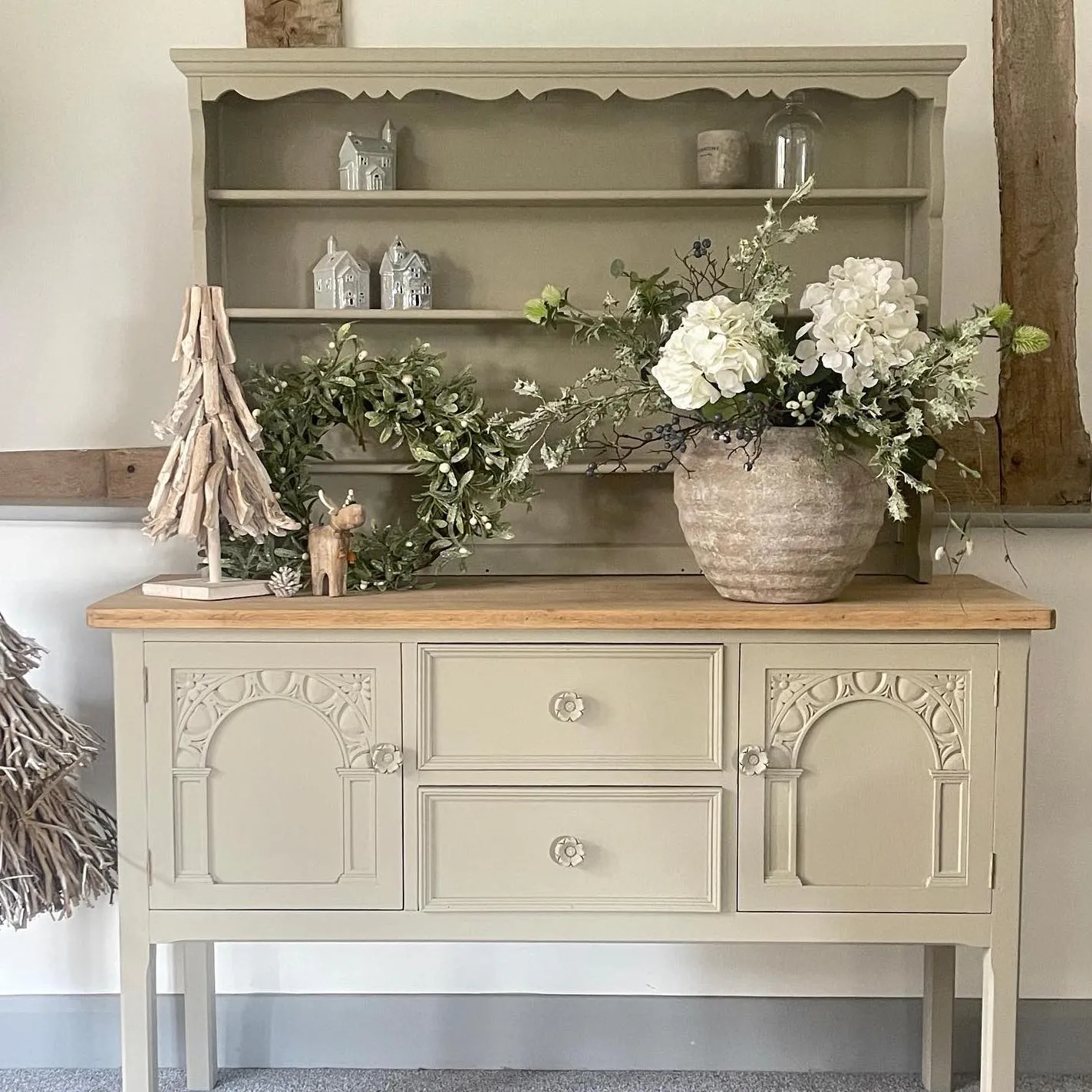
I sell Frenchic paint and I use it on plenty of my own pieces, so I am hardly against painting furniture. What I am against is painting the wrong thing. A brush takes ten minutes to pick up and it can knock a serious amount off what a piece is worth, permanently.
Leave it alone if the wood is doing the work. Figured mahogany, walnut, burr veneers and good oak all earn their keep through the grain and the colour. That deep glow takes a hundred years to develop and about twenty minutes to cover up. Mid century teak is the same. The market wants it bare, and painted teak is very hard to sell.
Leave it alone if there is anything original on it. Original paint, gilding, stencilling, a maker's label inside a drawer, a stamped mark on the frame. All of that is part of the history and part of the value. Painting over an original painted finish is the one that really hurts.
Leave it alone if you might sell it on. If a piece is genuinely good, painting it narrows your buyers down to people who happen to like that exact colour. Original condition keeps your options open.
Paint it if the wood is unremarkable. Plain twentieth century pine, plywood, chipboard carcases, cheap wardrobes and chests of drawers. These were never beautiful and paint makes them a great deal better. Same goes for anything that has already been stripped badly or damaged.
Paint it if it has been painted before. Once a piece has had a previous coat, there is nothing left to protect. Go ahead and choose a colour you actually want.
Paint it if it is the wrong colour for your room and you plan to keep it. This is the honest one. If a piece is decent but not special, and you love it, and you are not going to sell it, then paint it whatever you like. It is your furniture.
If you are hovering somewhere in between, send me a photograph or bring a drawer front into the shop. I will tell you what I think, and sometimes what I think is that you should put the tin down.